
Baking with kids taught me to let the frosting be ugly
There is a photo on my phone of a smear of purple frosting on my kitchen ceiling. It has been my lock screen for three weeks now. Every time I unlock my phone and see it, I think of her standing on a stool, both hands in a bowl of buttercream, completely unaware that frosting could go anywhere but on top of a cupcake.
My daughter is almost four. She has helped me decorate cupcakes twice now and donuts once, and neither time went the way I pictured before we started.
What baking with kids actually looks like at home
I used to imagine baking with kids as something soft focus and gentle. Flour dust in a sunbeam, little hands patting dough, that kind of thing. The reality is closer to controlled chaos with sugar involved.
The first time, we were making simple vanilla cupcakes with a batch of pink buttercream. I piped the frosting on in neat little swirls, set out three bowls of sprinkles, and told her she could decorate however she wanted. She looked at the sprinkles, looked at me, and dumped an entire bowl onto one cupcake.
Then she picked it up and ate the sprinkles straight off the top before the cupcake ever made it to a plate.
The donuts were worse, in the best way
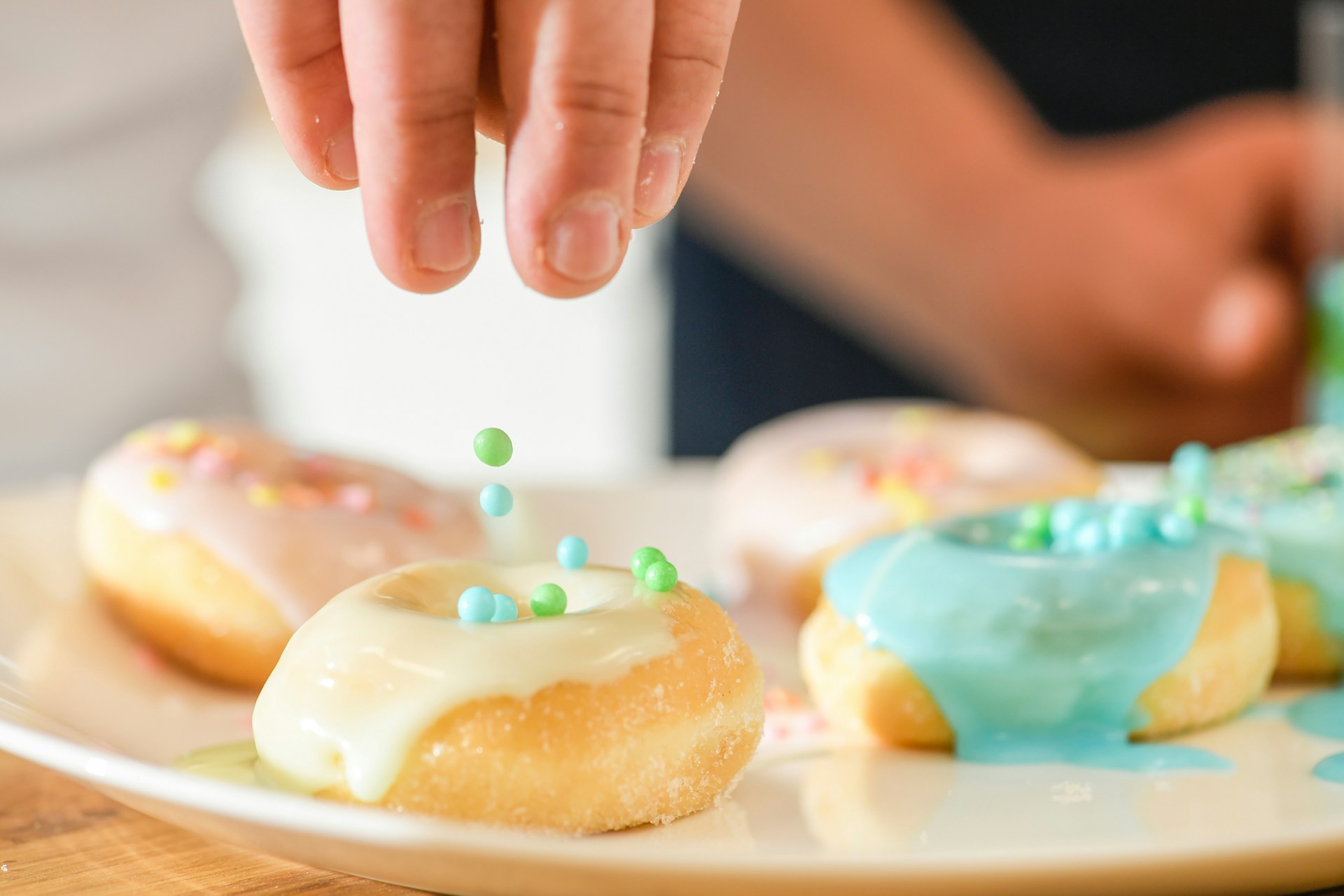
A few weeks later we tried glazed donuts, the kind you dip and top while the glaze is still wet. I had read somewhere that donuts are easier for small kids than cupcakes because the surface is flatter and there is less piping involved.
That part was true. What I had not accounted for was her deciding that dipping meant submerging the entire donut in the glaze bowl, twice, with her whole fist following it in.
We ended up with donuts that had more glaze pooled around the base than on top, and a kitchen counter that looked like a crime scene involving powdered sugar. She was proud of every single one. She lined them up on a plate by color, not by how good they looked, and made me guess which one she liked best before she would let anyone eat them.
Letting go of how it’s supposed to look
Here is the thing nobody really tells you about baking with kids. The end result stops mattering almost immediately once a small child is involved. I spent years getting frosting swirls even and glaze drips consistent, and none of that held any weight the moment she decided a cupcake needed googly candy eyes stacked three high.
I had to stop correcting her. That was harder than it sounds. My hands wanted to fix the lopsided sprinkle pile, smooth out the glaze, straighten the candy eyes. I kept them at my sides instead and let the cupcakes look like something a toddler made, because that is exactly what they were.
The cupcakes from that first afternoon were objectively kind of a mess. But she talks about them more than any cake I have ever made on my own, careful piping and all.
What she actually learned, and what I did
She is not learning technique yet. She cannot level a cake or fold in egg whites. What she is learning is that the kitchen is a place where she is allowed to make decisions, even small ones like how many sprinkles is too many sprinkles, which for her is apparently no such number.
I learned something too, watching her. I have a habit of baking the same way every time, following the recipe closely, worried about consistency. She approaches a bowl of frosting like it has never been used for anything before. There is no wrong way to put sprinkles on a cupcake if you have never been told there is a right way.
What baking with kids actually gives back
I did not expect to notice any real benefit beyond an afternoon of entertainment, but there is more to it than that. For her, scooping sprinkles and pressing them into frosting is quietly building the kind of hand control she will need for buttons and zippers and eventually a pencil. Waiting for the donuts to cool before dipping them taught her something about patience that no amount of me explaining it ever did. And deciding where the purple cupcake goes on the plate, or which one gets extra sprinkles, is her practicing that she gets to make choices, and that those choices matter to someone.
For me, the benefit showed up differently. Kids in the kitchen force you to slow down in a way that baking alone never does. I could not check my phone while she had both hands in a bowl of buttercream. I was not thinking about the next task on my list because it was making sure she did not eat raw batter by the spoonful. Those twenty minutes ended up being some of the most present I have been with her all week, and none of it required a plan.
A few things that made it easier
Vanilla cupcakes hold up well to enthusiastic decorating because the crumb is sturdy enough not to fall apart under small hands. If you want a recipe that survives a four-year-old’s frosting technique, look for one with a slightly denser batter rather than something delicate. For decorating, I stopped putting sprinkles in bowls and started putting them on a plate instead, since a plate is much harder to dump entirely in one go than a bowl.
Buttercream also matters more than I expected. A softer buttercream spreads more easily under small hands and forgives a lot of unevenness, which meant less frustration for both of us. If you’re deciding how to approach the frosting itself, our notes on simple, less-is-more cake decoration are a good place to start, since the same idea of keeping it simple applies double when a toddler is holding the spatula.
If you have a small child at home, this activity is awesome; give it a try one weekend, even just cupcakes and a bowl of sprinkles.
It might not look the way you imagined either, and that turns out to be the good part. If you’ve already been through this, I’d love to hear what worked for you; drop your tips in the comments.