
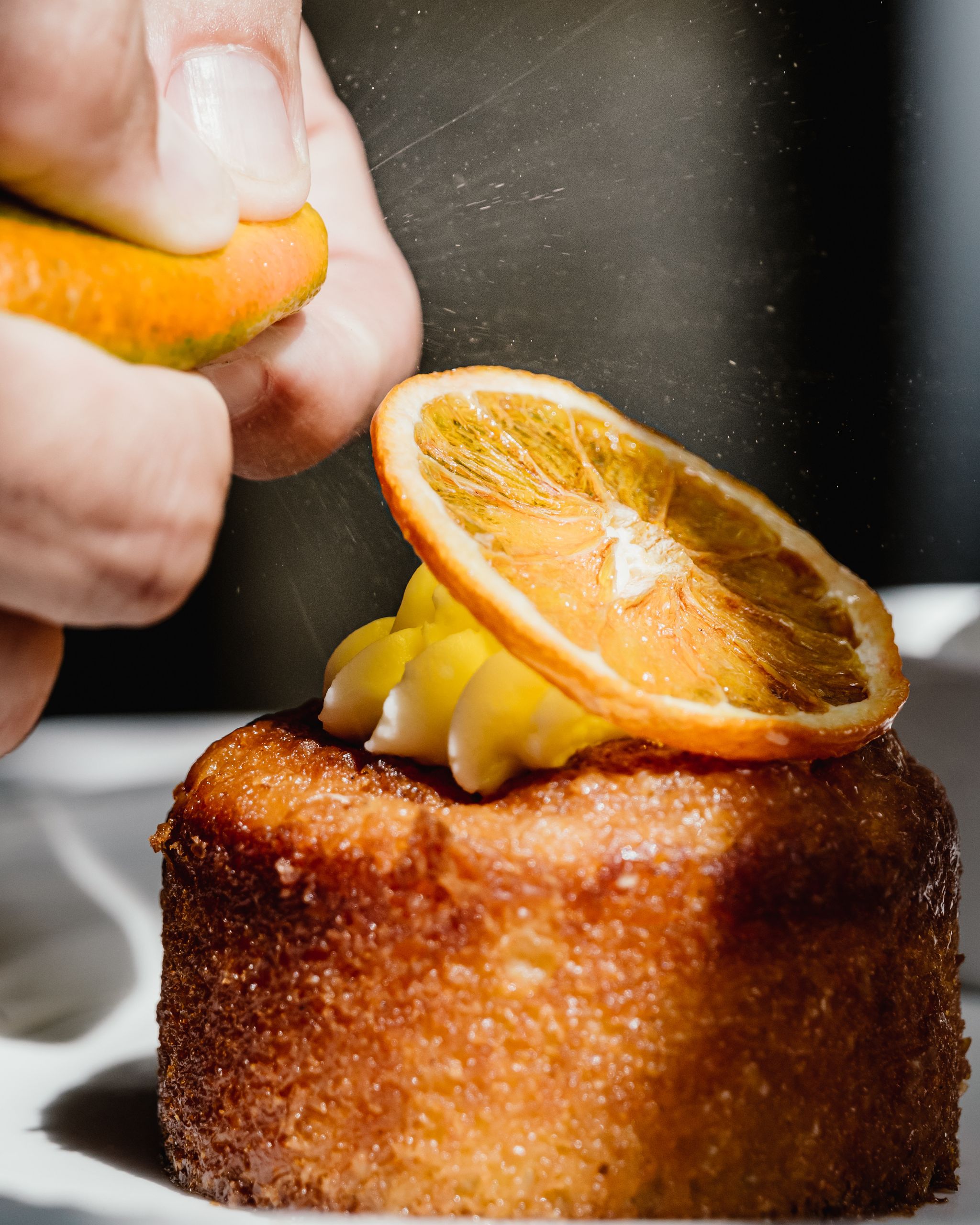
What citrus zest actually does to your baking?
For years, I squeezed lemons into my batter and threw the peel straight in the bin.
Didn’t think twice about it. The juice was the point, right? The peel was just packaging. Then one afternoon I watched someone rub lemon zest into a bowl of sugar with her bare hands, and the smell that came out of that bowl genuinely stopped me in my tracks.
Not sharp or sour like lemon juice. Something rounder and more alive, like standing inside a lemon tree, if that makes any sense. That was the day I understood what citrus zest actually does to baking, and I have not thrown away a peel since.

The juice and the zest are doing completely different jobs
Here’s the thing nobody tells you clearly: citrus juice and citrus zest are not the same ingredient doing the same thing at different intensities. They’re doing different things entirely.
Juice is mostly water and citric acid. It adds tartness and a little brightness, but the aromatic compounds that make your brain say lemon that fragrant, almost floral quality are concentrated almost entirely in the outer skin. Those oils live in tiny pockets just beneath the surface of the peel, and they don’t transfer into the juice when you squeeze.
So when you bake with only citrus juice, you get tartness. When you bake with citrus zest even a small amount you get actual citrus flavor. The difference is not subtle.
This is also why so many lemon cakes taste “flat” even when the recipe includes plenty of lemon juice. The acid is there, the tartness is there, but the fragrance that makes something taste unmistakably of lemon is mostly absent. Adding a tablespoon of zest fixes this immediately.
The one technique that changes everything, yay!
Before the zest goes into anything, rub it into your sugar first.
Add the zest to your measured sugar and use your fingertips to work it in for about 30 seconds. You’ll feel the sugar go slightly damp, see it change color a little, and smell something that’s almost overwhelmingly citrusy in the best possible way. What you’re doing is breaking open those tiny oil pockets and coating each sugar crystal with them. When this goes into your batter, the flavor spreads through the whole thing rather than sitting in clumps.
I use this trick every single time I bake with citrus now. It costs nothing, it takes half a minute, and the difference it makes is noticeable in the final result. It also works with any citrus such as lemon, orange, lime, grapefruit, clementine. The same logic applies across all of them.
How much to use?
This is where people sometimes get nervous, so here’s a simple reference:
- One medium lemon gives you about 1 tablespoon of zest
- One medium orange gives you about 1½ tablespoons
- One lime gives you about 2 teaspoons
- One large grapefruit gives you about 2 tablespoons
For a standard loaf cake or batch of 12 muffins, 1 tablespoon of lemon zest is present and pleasant. Two tablespoons is unmistakably, boldly lemon. Beyond that, taste as you go; lemon and orange are forgiving, but lime and grapefruit can tip into bitter if you overdo it.
Start with 1 tablespoon, taste your batter, decide from there. You can always add more; you can’t take it back.
Which citrus is worth seeking out right now?
Standard lemons and navel oranges are fine year-round, but winter brings a few varieties that are genuinely worth going out of your way for.
Meyer lemons are sweeter and less acidic than regular lemons, with thin skin that zests easily and a floral fragrance that regular lemons don’t have. If you’ve never baked with them, a Meyer lemon loaf cake will convert you immediately.
Blood oranges taste a little like raspberries snuck into an orange. Their juice turns deep pink when you reduce it, which makes for a glaze that looks far fancier than it is. I use them mostly for that reason.
Clementines are intensely sweet and fragrant, and their zest is excellent in butter cookies or shortbread; the flavor is rounder and warmer than standard orange.
The tool that makes it easier!
A microplane zester is the one kitchen tool I’d genuinely recommend for anyone who bakes with citrus at all. It removes only the outermost colored layer of zest without catching the white pith underneath, which is bitter. It’s fast, produces fine, even zest, and costs very little.
If you don’t have one, the fine side of a box grater works. Just go slowly and rotate the fruit so you don’t grate the same spot twice; that’s where you hit the pith.
Either way, wash and dry the fruit thoroughly before you start. The outer skin is where any residue concentrates, and a good scrub under hot water takes care of it.
What to do with the rest of the fruit?
Once you’ve zested it, use the juice the same day, exposed citrus dries out quickly. For baking, the easiest thing is a simple glaze: sifted powdered sugar mixed with fresh juice until it just pours. Drizzle it over a warm loaf and it soaks in slightly as it cools, adding flavor and keeping the crumb moist longer.
Any juice you can’t use immediately, freeze in an ice cube tray. Each cube is roughly 2 tablespoons and almost ready to drop into a recipe whenever you need it, no fresh fruit required.
The cranberry orange scones recipe is a good place to try the zest-into-sugar technique for the first time. Let’s discover it with us!
For more winter fruit inspiration, head back to Seasonal baking: winter fruits in desserts.