Cranberry orange scones recipe that actually come out flaky
My first batch of scones came out like hockey pucks. Dense, pale, barely risen. I ate them anyway because with enough butter and jam, most baked goods are survivable. But I understood immediately why scones have a reputation for being difficult.
They’re not difficult. These cranberry orange scones are proof of that. They just have one rule that no one explains clearly, and if you don’t know it, hockey pucks is what you get. Every time.
Why most cranberry orange scones come out wrong
Keep everything cold. Work fast.
That’s the whole secret to a flaky cranberry orange scones recipe.
The flakiness comes from pockets of cold butter that hit the oven and release steam, which creates layers. If the butter warms up before the scones go in, those pockets melt before they can do anything useful. The steam escapes too early. You get something dense instead of something layered.
This happens because you’ve been working the dough too long, or your kitchen is warm, or you used refrigerator-cold butter instead of frozen. Every step of this recipe is designed to prevent exactly that.
Why cranberry and orange work so well together
Cranberries are sharp and tart on their own. Baked into buttery dough for these cranberry orange scones, they mellow slightly and that tartness cuts through the richness in a way that makes each bite taste less heavy. Without something like that, scones can feel like a lot.
Orange zest adds warmth and fragrance without adding any liquid, which would throw off the texture. The orange goes in twice in this recipe: zest rubbed into the sugar for the dough, and juice in the glaze. The flavor carries all the way through rather than disappearing into the background.
If you want to understand why the zest makes such a difference, King Arthur Baking has a good explanation of citrus oils in baking that’s worth a quick read.
If you haven’t tried the zest-into-sugar technique yet, this is a great place to start. You’ll smell the difference immediately when you’re mixing.
Ingredients for cranberry orange scones
Makes 8 scones
For the scones:
- 240g (2 cups) all-purpose flour
- 50g (¼ cup) granulated sugar
- 1 tbsp baking powder
- ½ tsp fine salt
- 1 tbsp fresh orange zest (from about 1 large orange)
- 115g (½ cup) unsalted butter, frozen
- 150g (1½ cups) fresh or frozen cranberries
- 180ml (¾ cup) heavy cream, cold, plus a little extra for brushing
- 1 tsp vanilla extract
For the orange glaze:
- 120g (1 cup) powdered sugar, sifted
- 2–3 tbsp fresh orange juice
How to make them
1. Get the oven going Preheat to 200°C (400°F). Line a baking sheet with parchment.
2. Combine dry ingredients Whisk together flour, baking powder, and salt in a large bowl. Add the sugar and orange zest, then use your fingertips to rub the zest into the sugar for about 30 seconds until the whole mixture smells of orange and the sugar feels slightly damp. This is the step that makes the flavor go all the way through.
3. Add the frozen butter Grate the frozen butter directly into the flour using the large holes of a box grater. Toss quickly with a fork to coat the butter shreds in flour. You want the mixture to look like coarse crumbs with a few pea-sized pieces still visible — that’s exactly right.
4. Add cranberries Toss the cranberries through the flour mixture to distribute. If using frozen, add them straight from the freezer — don’t thaw them first.
5. Add the liquid Stir the vanilla into the cold cream. Pour over the flour mixture and stir with a fork until the dough just barely comes together. It’ll look rough and shaggy and you’ll be tempted to keep mixing — don’t. Stop the moment it holds.
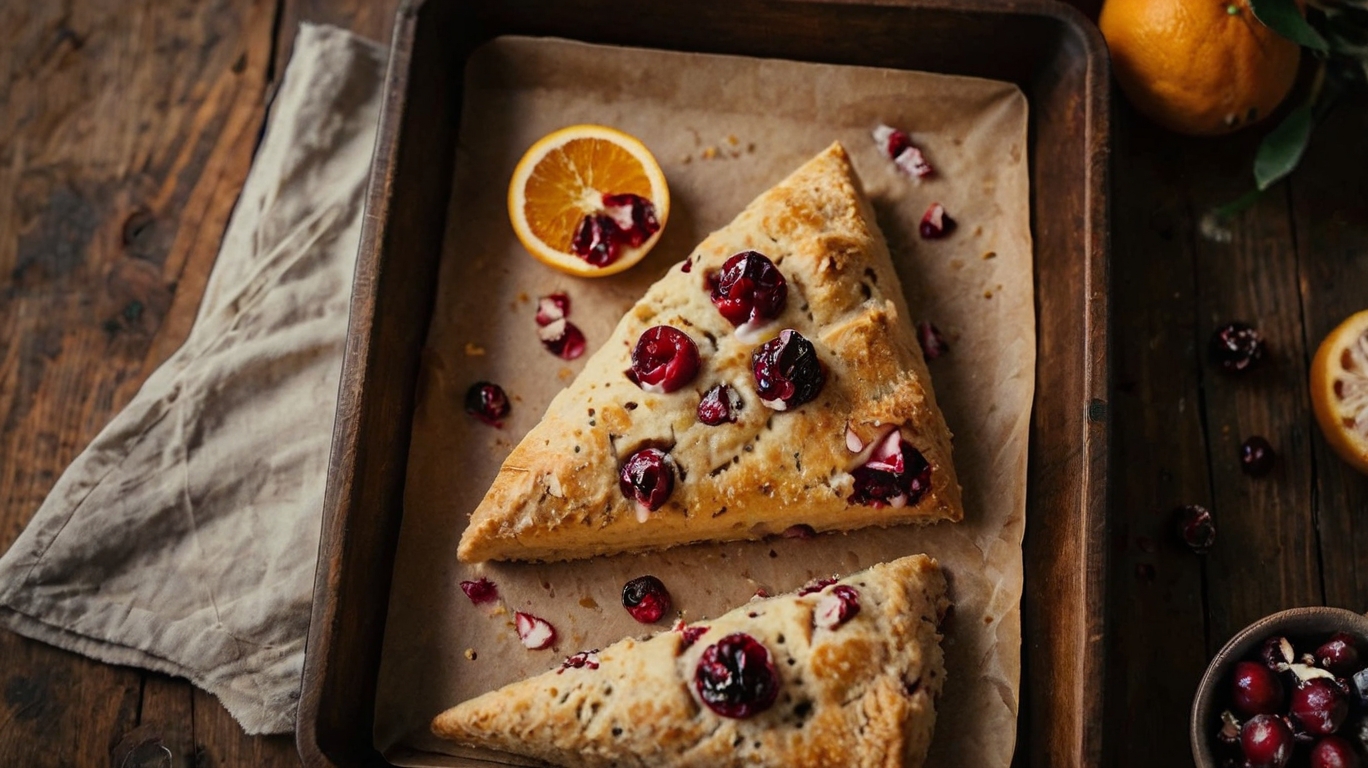
6. Shape and cut Turn the dough out onto a lightly floured surface and press it into a circle about 20cm (8 inches) wide and 2cm thick. Cut into 8 wedges like a pizza. Transfer to the baking sheet.
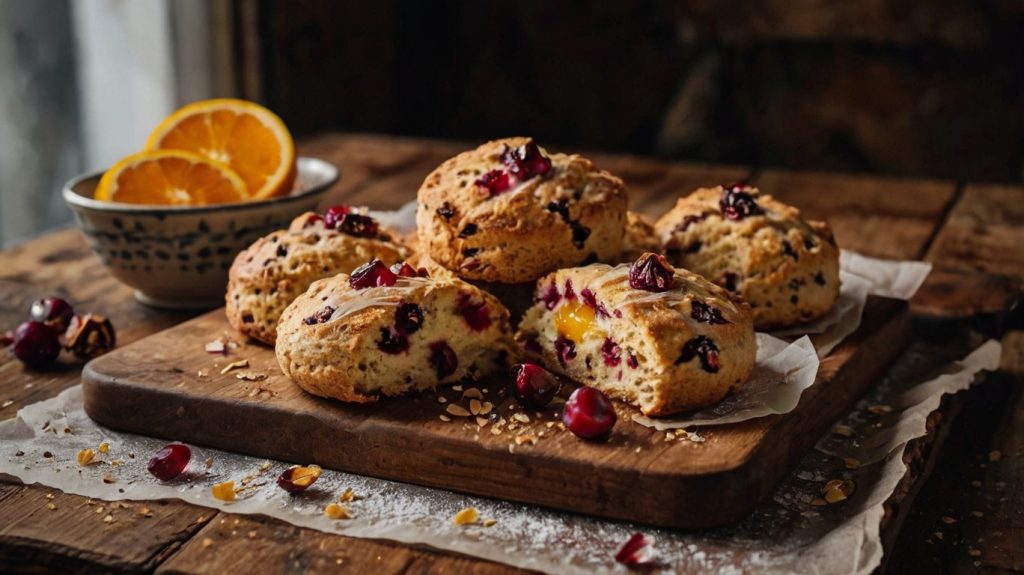
7. Brush and bake Brush the tops with a little cold cream. Bake 16–18 minutes until golden on top and the edges look set.
8. Make the glaze While the scones are cooling slightly, whisk the powdered sugar with orange juice until smooth and drizzleable. Add the juice gradually — you want it thick enough to coat a spoon but thin enough to pour. Drizzle over the warm scones.
Tips for getting these cranberry orange scones right
For even flakier scones: After cutting into wedges, slide the tray into the fridge for 15 minutes before baking. It re-firms the butter and makes a noticeable difference to the layers.
Frozen cranberries work just as well as fresh. They also help keep the dough cold while you’re working, which is useful.
No heavy cream in the fridge? Cold buttermilk is the best substitute and adds a slight tang that works really well in a cranberry orange scones recipe like this one.
Make-ahead option: Freeze unbaked wedges on a tray until solid, then transfer to a bag. Bake directly from frozen at 200°C for about 20–22 minutes.
Leftovers: Cranberry orange scones are best on the day, but store any leftovers in an airtight container at room temperature and warm briefly in a low oven before eating.
For reference on scone ratios and technique, BBC Good Food’s scone guide is one of the clearest explanations out there.
The orange zest technique used in this cranberry orange scones recipe — rubbing it into the sugar before mixing — is explained in more detail in What citrus zest actually does to your baking.
More winter baking ideas over at Seasonal baking: winter fruits in desserts.