Fresh berry pavlova recipe that doesn’t turn into soup
I made my first pavlova for my sister’s birthday in Mar, which in hindsight was the whole problem. The kitchen was warm, the air was thick, and I opened the oven twenty minutes early because I couldn’t stand not knowing. By the time we sliced into it, the middle had gone glassy and wet, and a thin pink puddle was spreading across the plate. My sister ate it anyway and said it was “rustic.” It was not rustic. It was soup with fruit on it.
That disaster sent me down a rabbit hole on meringue, humidity, and why a berry pavlova recipe that works fine in October can fall apart completely in the middle of summer. Turns out the fix has almost nothing to do with the recipe itself and everything to do with a handful of small habits most tutorials skip.
Why pavlova weeps in humid weather
Meringue is sugar and egg white holding onto air, and sugar is greedy for moisture. On a humid day, it pulls water straight out of the air around it, which is exactly what happened in my kitchen that July afternoon. The shell looks fine going in, then slowly softens and beads with liquid while it cools.
Baking on a dry, cool day solves most of this on its own. When that’s not an option, close the kitchen windows, skip the exhaust fan mid-bake, and resist the urge to check on it. Every time that oven door opens, warm humid air rushes in and undoes the work the low, slow heat was doing.
The meringue base has to be right before it goes in
A soft, glossy meringue with sugar that hasn’t fully dissolved will always weep, no matter how careful you are with the oven. Rub a little of the mixture between two fingers before you pipe or spread it. If it feels gritty, it needs more whipping time. It should feel completely smooth, almost like satin.
Cornstarch and a splash of vinegar aren’t optional extras here. They’re what give the inside that soft, marshmallow center while the outside stays crisp enough to hold berries without going soggy underneath.
Bake low, then leave it alone
I bake mine at 250°F for about an hour and a half, then turn the oven off and leave the pavlova inside with the door shut until it’s completely cool, usually another hour or two. That slow cooldown matters more than the bake time itself. A meringue pulled out while it’s still warm meets room-temperature air too fast and cracks, and cracks are where moisture gets in first.
If your oven runs hot, an oven thermometer is worth the five dollars. A pavlova that’s technically “done” but baked ten degrees too hot on the outside will crisp before the inside sets, and that’s its own kind of trouble.
Add the berries at the very last minute
This one took me two more attempts to learn. Strawberries, blueberries, and cherries all carry a lot of juice, and juice sitting on meringue for even thirty minutes will start softening it from the top down. Whip the cream, slice the berries, and keep everything separate in the fridge until you’re ready to serve. Assemble the pavlova at the table if you can, right before the first slice.
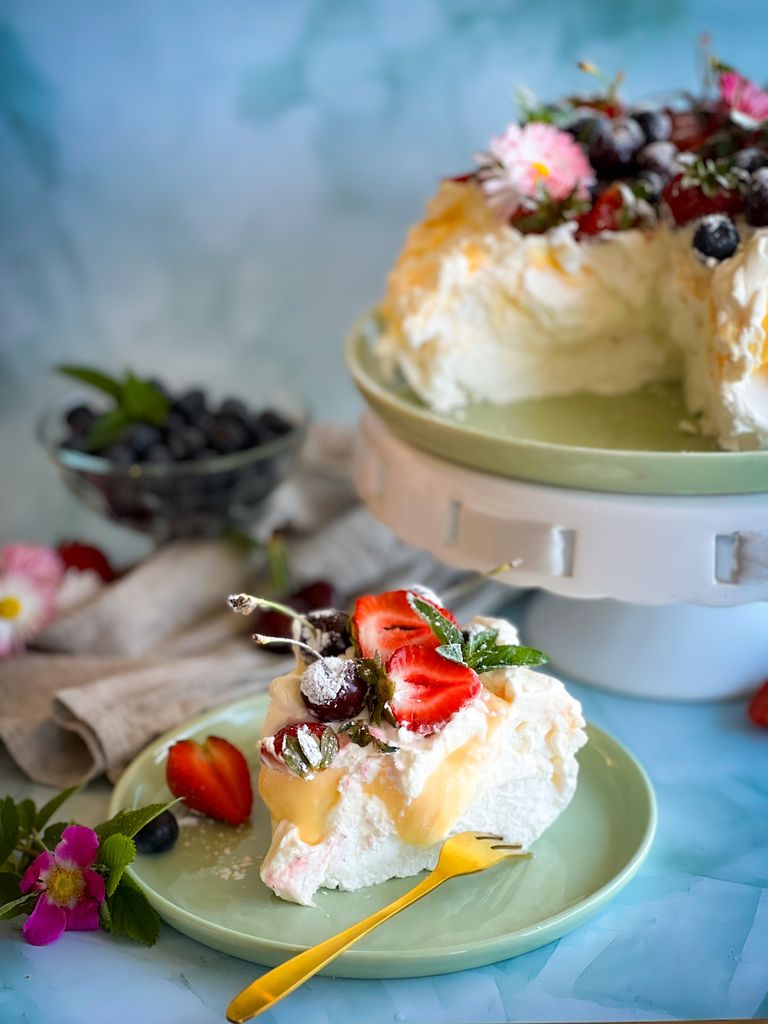
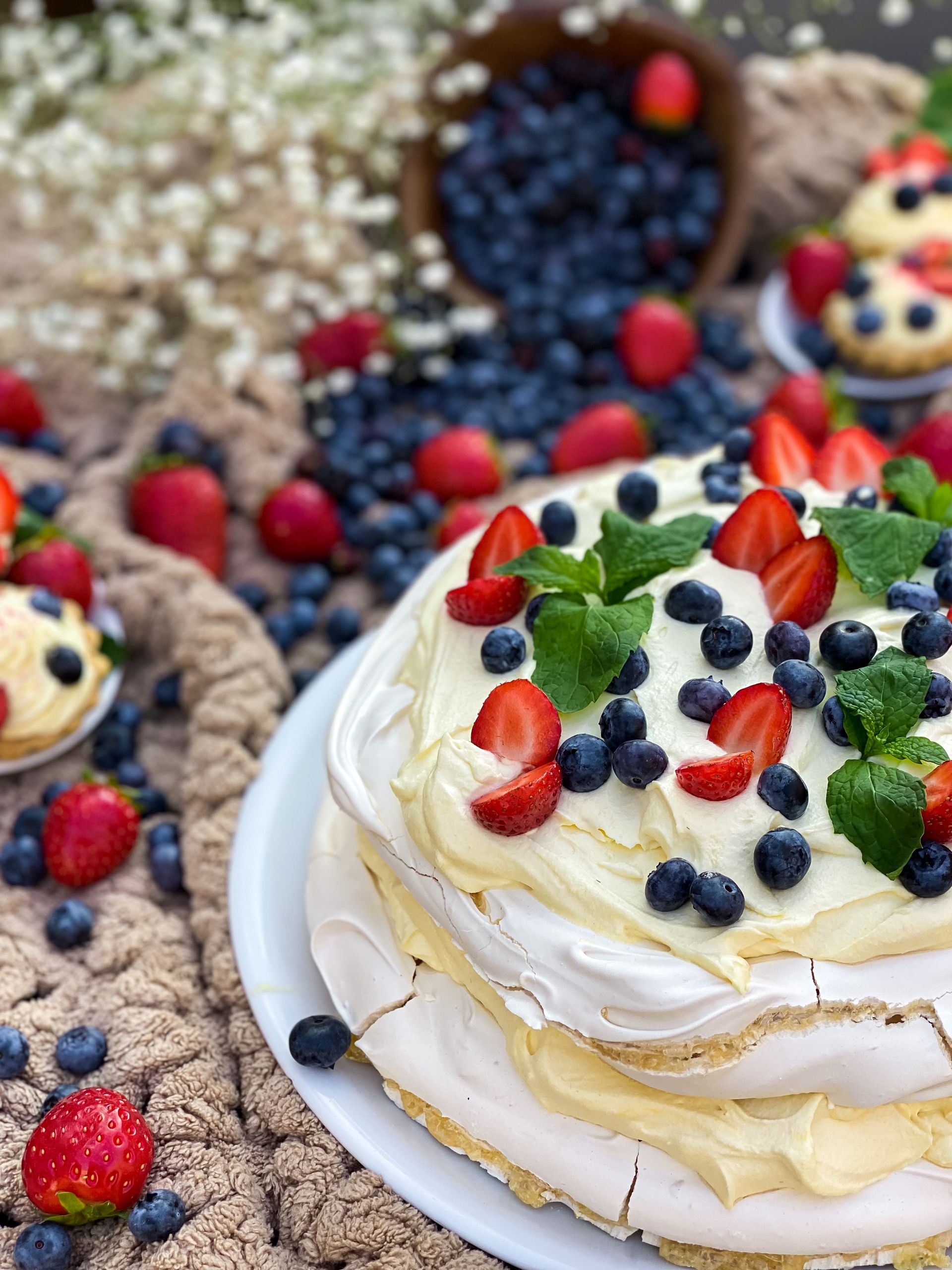
This is the version I make now, the one that finally held together the way I wanted that first one to. The shell is crisp outside, soft and marshmallowy inside, and the berries go on cold and last minute so nothing turns to soup.
Ingredients of this fresh berry pavlova recipe
Bakerspost recipe card
Fresh berry pavlova
For the meringue
For the topping
Instructions
- Preheat the oven to 250°F. Line a baking sheet with parchment and trace a 9-inch circle as a guide.
- Whip the egg whites on medium speed until soft peaks form, about 2 minutes.
- Add the sugar one tablespoon at a time, whipping continuously. This slow addition is what keeps the sugar from clumping and leaving grit in the finished shell.
- Once all the sugar is in, whip on high for 6 to 8 minutes, until the meringue is thick, glossy, and holds a stiff peak. Rub a bit between your fingers to check it’s smooth.
- Gently fold in the cornstarch, vinegar, and vanilla.
- Spread the meringue inside the traced circle, mounding the edges up and pressing a shallow well into the center with the back of a spoon. The middle puffs up some as it bakes, so make that dip deeper than feels natural. It’s what keeps the cream and berries from sliding off later.
- Bake for 1 hour and 30 minutes. Turn the oven off and leave the pavlova inside, door closed, until fully cooled (1 to 2 hours).
- Whip the cold cream with powdered sugar until soft peaks form.
- Just before serving, spread the cream over the cooled shell and top with strawberries, blueberries, cherries, and mint.
Storage
The bare meringue shell keeps in an airtight container at room temperature for up to 2 days, as long as it’s kept away from humidity. Once topped with cream and berries, serve it within a couple of hours. It doesn’t hold up well overnight.
Tips
- Don’t make pavlova on a rainy or heavily humid day if you can help it. It’s the single biggest factor in whether the shell holds.
- A cracked top isn’t a failure. It’s actually where the cream and berries settle in nicely.
- For more on egg white structure and why room temperature matters so much, King Arthur Baking has good technical breakdowns if you want to go deeper into the science.
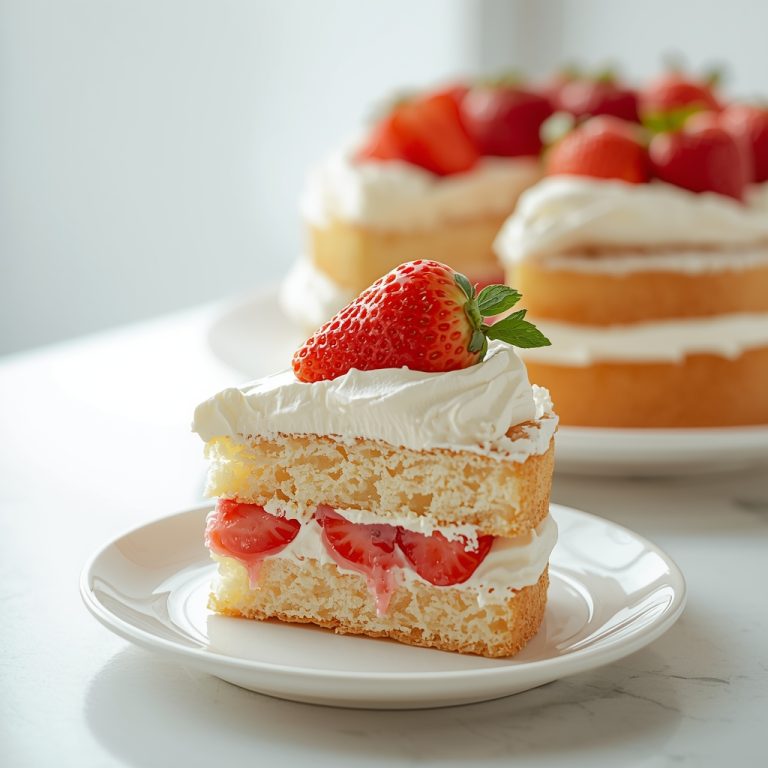
That pavlova from my sister’s birthday still comes up at family dinners, usually right before someone asks if I’m bringing dessert. I always say yes, and I always bring this one now, with the berries added at the door so the first slice still holds its shape. If you’re looking for something else to bake with fresh berries, my Strawberry Cake uses the same trick of keeping fruit separate until the last minute, and it’s just as forgiving.